
Lucas County Court Docket Searches
Lucas County runs no single master docket. For a current Common Pleas General Division matter, begin at the Navigator Public Portal. Smart Search there takes three keys. A case number, warrant number, or party name works. Enter a party name last name first. A result row leads to Case Summary and then to the Register of Actions, the county's chronological list of events in the case. General Division information also moved into account-based re:SearchOH and Justice Case Access channels. Each municipal court keeps its own system.
Start with a notice, citation, or case number when you have one. The issuing court, the event location, and the case prefix help separate a Common Pleas record from a Toledo, Oregon, Sylvania, or Maumee municipal record. A name result is only a lead. Confirm the case number, filing date, status, and party role before treating an entry as the right case.
- Identify the court from the citation, notice, case prefix, or location of the case.
- Open the matching official portal, beginning with Navigator for current General Division records.
- Search by the exact case number or enter a party name in last-name-first order.
- Open Case Summary and read the Register of Actions with the status and filing date.
- Use Search Hearings or the court clerk when a date, document, or certified record needs confirmation.
Note: An adult municipal citation has its own docket keeper. A Common Pleas case with a similar party name is a different record entirely.
Lucas County Portal Transition
Lucas County reworked how the public reaches General Division records in early 2026. According to the county's Online Dockets notice, General Trial Division information moved to re:SearchOH and Lucas Justice Case Access on January 6, 2026. Both are Tyler services. Each one asks you to register an account first. The county calls Justice Case Access the richer channel, since it adds financial data and party-address details that the other route lacks. Navigator still works without any account, though. Its Smart Search and Search Hearings tools remain open to anyone doing a Lucas County docket search.
The old General Division online-docket link now serves a narrow legacy purpose. It is being retired as the new routes catch up. A legacy screen can still add historical context. Treat it as background only. If an old result disagrees with Navigator, JCA, a signed order, or the Clerk's file, trust the current court record. Then ask the record keeper to resolve the conflict. A docket entry from a dying system should never settle a question about today's hearing or filing status.
For the division that holds the paper, the county's Clerk of Courts page names the Legal Division as keeper of Common Pleas appellate, civil, felony criminal, and domestic-relations filings. One distinction trips people up. Filing through eFileOH is not case lookup. A filing system sends your papers to the court. The docket route is what lets you find the case record or a court date afterward.
The county's transition notice lays out the current online routes in plain terms. It also clears up a common confusion. An older General Division search link can miss newer results, which is why a stale search sometimes looks like a missing case.
That Clerk page is your practical bridge. It connects a portal search to the office that can locate or certify the underlying Common Pleas record.
Court Dockets: What They Show
A Lucas County docket is the court's running index of a case. It is not a narrative summary. It is not a guaranteed copy of every document. Navigator labels the chronological event list the Register of Actions. A result screen may first show the case number, the civil style or criminal defendant, the file date, the status, and each party's name and type. Click the case number to open Case Summary. A related-document icon on an entry signals an image tied to that event. You may be able to open or download it.
What appears varies by court, case type, configuration, and access restriction. Navigator's official guide supports the fields. But it publishes no universal list of charges, balances, bond information, or disposition labels for every Lucas County case. A hearing search adds its own calendar fields. Treat the online entry as a locator and record-reading tool. It is no substitute for a signed, journalized action.
| Case number | The local identifier, such as CI2024-00001 or CR2024-00001, that opens the case summary. |
|---|---|
| Style or defendant | The civil caption or criminal party label shown in a Navigator result. |
| File date and status | Result fields that should be read together with the court and Register of Actions. |
| Register of Actions | The chronological docket entries and any related-document indicator. |
| Hearing setting | Where configured, Search Hearings may show date, time, type, judicial officer, and courtroom. |
| Document image | A related image can be TIF for legacy-converted material or PDF for newer case-management images. |
Lucas County Docket Numbers
Case-number format is a big Lucas County search checkpoint. The General Division converted its numbering on October 4, 2024. That date separates short current numbers from longer legacy strings. Civil cases opened on or after that date use a format such as CI2024-00001. Criminal cases use CR2024-00001. Tax-foreclosure and appellate routing can use TF and CL in place of CI. Each new criminal case is assigned to one defendant.
Older General Division numbers keep their punctuation and zero wrappers. The Navigator guide offers examples. One is G-4801-CI-0202301234-000 for a legacy civil case. Another is G-4801-CR-0202301234-000-D1 for a converted criminal case. The D1, D2, or D3 ending may matter. Old multi-defendant criminal cases were separated during conversion. One missing hyphen or suffix can block an exact search even when the case exists.
The Clerk's General Division eFiling page and the Navigator manual document this transition. Still no result? Try the correct name format first. Then ask the relevant Clerk division to confirm the court and identifier. Don't guess at a new number.
Lucas County Courts and Dockets
Which court keeps a Lucas County record depends on case level and case class. The Lucas County Court of Common Pleas, General Division holds the county's felony dockets. It also holds the county's major civil cases. Domestic Relations, Juvenile, and Probate sit alongside it as separate Common Pleas divisions. Sharing county government does not merge their records. Four municipal courts keep adult traffic, misdemeanor, and local civil dockets inside their statutory territories. They sit in Toledo, Oregon, Sylvania, and Maumee. Waterville residents fall under Maumee Municipal Court. The Ohio Supreme Court's trial-court directory lays out this Lucas court structure. So the first job is picking the right keeper. Don't run one broad name through every court. A municipal court can hold a preliminary felony hearing. A charged felony, though, usually produces a later Common Pleas CR docket. Juvenile traffic stays in Juvenile Court, on its own track.
| Court | Docket covers | Where to search |
|---|---|---|
| Common Pleas General Division | Felony, major civil, tax foreclosure, judgment lien, and related appellate work | Navigator, account-based JCA/re:SearchOH, or Lucas Clerk Legal Division |
| Domestic Relations and Juvenile | Family matters and separate juvenile records, including juvenile traffic | Matching division, not the General Division search stream |
| Toledo, Oregon, Sylvania, Maumee municipal courts | Adult traffic, misdemeanors, lower-value civil work, and local proceedings | Each municipal clerk's portal, schedule, phone line, or counter |
Ohio's judicial-system overview supplies the state-level court hierarchy behind these separate docket channels.
That structure shapes any Lucas County docket search. You begin with the court that actually heard the matter, since no single countywide record list exists.
Four Lucas Municipal Docket Routes
Adult traffic and misdemeanor dockets in Lucas County usually live in municipal court. Each court handles records its own way. Toledo Municipal Court splits its case information into Civil and Criminal/Traffic channels. Oregon Municipal Court ties its official records to NORIS. Sylvania offers a court record and payment system, though a verified record still takes a written request or an in-person visit. Maumee's online tools are a payment portal and an eligible-case-resolution option rather than a full public search. For anything broader, a Maumee Clerk phone call or counter visit is the fallback.
The Lucas County Prosecutor's court guide connects all four municipal courts to Common Pleas. It also explains how they relate. Where a person lives does not settle the question. Waterville, for instance, posts no separate municipal-court docket of its own; its adult municipal cases route to Maumee. The citation itself, the location of the alleged event, and the court named on the notice are better routing facts. They beat any countywide search phrase.
One case can leave footprints in two courts. A municipal preliminary hearing record and a later General Division felony docket are different stages. They are held by different tribunals. The municipal entry captures the early proceedings, while the Common Pleas CR record carries the felony case history once charges land there.
The local court guide gives the official links for picking the right municipal path. It earns its keep when a notice names a city court rather than the Common Pleas Court.
That four-court map makes the first step plain. Match the citation or court notice to its local record keeper before touching any search tool.
Court Dates and Settings in Lucas County
For General Division cases, Navigator's Search Hearings tool is the main online date locator. Pick a location. Choose hearing types if that helps. Set a date range, then narrow by case number, party, business, attorney, judicial officer, magistrate, or courtroom. A result can list case number, civil style or criminal defendant, case type, date and time, hearing type, judge or magistrate, courtroom, and case category. Click the case number to return to the case summary. A signed and journalized order or notice remains the authoritative date. The online hearing row is handy for spotting a setting. But it can be incomplete, restricted, historical, or superseded. The Clerk's FAQ sends Common Pleas date-change questions to the assigned courtroom, because only a judge can approve a change. Toledo posts separate civil and criminal/traffic schedules; Oregon, Sylvania, and Maumee use their own local channels. For the full Lucas County calendar and reset workflow, use the Lucas County Court Schedule. A court date shown in a payment system is not an order moving a hearing.
Lucas County Hearing Search
Want a setting rather than a whole case file? Navigator Search Hearings beats a general case search. The official Navigator Portal Manual lists the working controls: location, hearing type, search type, a conditional value field, and a date range. Its named search-type options cover Case Number, Party Name, Business Name, Attorney Name, Attorney Bar Number, Judicial Officer, Magistrate, and Courtroom. Expect a captcha before the portal submits your request.
| Search field | How it helps | Result use |
|---|---|---|
| Date range | Limits a calendar review to the relevant period | Check date and time against the newest case entry or notice |
| Case number or party | Locates a particular setting | Open the linked case summary for its Register of Actions |
| Judge, magistrate, or courtroom | Helps locate a court's schedule | Use the courtroom contact if the displayed date is disputed |
Result rows can be sorted, filtered, printed, or shown in calendar view. Restricted parties may not appear at all. If a date looks missing or wrong, ask the Clerk file room or the courtroom staff rather than assuming the hearing was cancelled. An empty row proves nothing. The official Navigator instructions lay out each hearing-search control. They sit on the court's own page, no private record needed.
That Clerk routing backs up the local rule on disputed settings. A Common Pleas date is confirmed through the assigned court, never by a portal result alone.
Docket Access Under Ohio Law
Ohio treats court records as open in most cases, yet the openness has firm edges. The Ohio Rules of Superintendence draw one line. It separates walking into the courthouse to inspect a file from reaching it through remote electronic access. Restricted court records get their own category. Lucas County's Clerk policy also tracks the Ohio Public Records Act. That applies to anything held in that office. None of this makes every online field visible. A sealed, juvenile, restricted, or protected record stays out of public search results no matter how the rules are read.
When a General Division record does appear, Navigator can carry you to case entries and linked images where public access is allowed. When something is missing, the lawful move is simple: identify the court that keeps it and contact that office. The Clerk policy accepts oral or written requests, so long as they reasonably identify the record. No fixed form is required. No purpose needs to be stated. If material is redacted or denied, the legal basis should be named. Anything not exempt may still be released.
Ohio record-access rules.
Ohio Sup.R. 44-45 defines court records and the presumption of public access, including direct and remote access distinctions.
ORC 2303.12 assigns Common Pleas docket duties to the clerk and addresses online general-docket access.
ORC 2303.901 excludes defined personal identifiers and protected materials from public case documents.
ORC 149.43 is the Ohio Public Records Act authority cited in the Lucas Clerk policy.
Ohio's court-record access rules set the state framework, and Lucas County applies it through its own court and clerk channels.
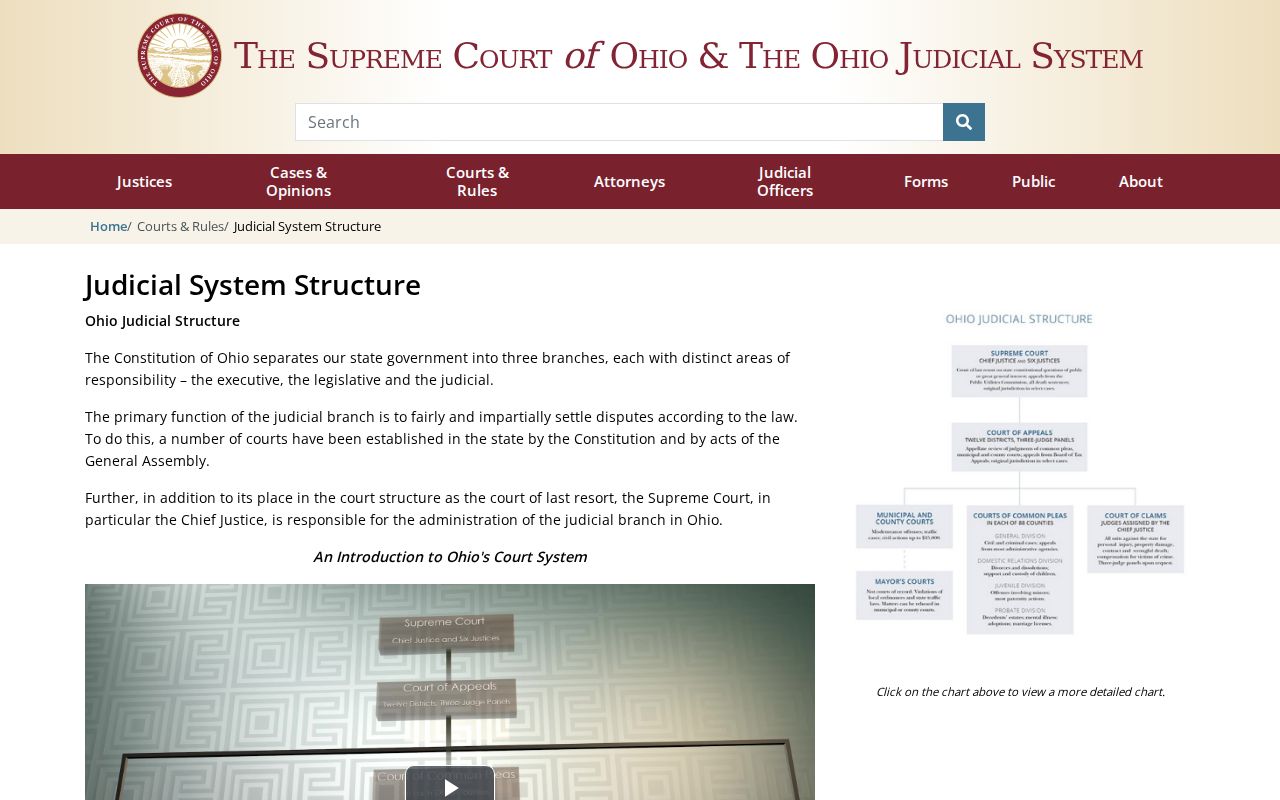
Under the state structure, docket keepers sit at separate court levels. The Common Pleas keepers and the municipal keepers each answer for their own records.
Restricted Lucas Portal Results
An empty result screen proves nothing about whether a case ever existed. Navigator can hide a party or a whole result through a party connection key, a case type, or a case security group. A restricted party simply does not display online. Other explanations are common too. The wrong court may have been searched. A legacy number may have been entered in the wrong format, or the matter may belong to the separate Domestic Relations or Juvenile Court. Some cases predate online coverage. A seal or redaction rule can also apply.
Ohio law separately shields personal identifiers and defined Domestic Relations and Juvenile materials. Juvenile Court runs its own traffic docket under ORC 2152.71. A sealed or expunged adult record may carry a restricted or deleted index reference under the applicable statute. Do not try alternate spellings or broad searches to slip past a restriction. Bring the exact case context to the court or clerk. Ask what public access, if any, is lawful.
Lucas County also warns that a web entry can appear before it is signed and journalized. A visible entry is not automatically the controlling court action. Confirmation comes from the signed order, the journalized entry, the assigned courtroom, or a certified record from the keeper.
How the Clerk Keeps Docket Records
The Lucas County Clerk of Courts, Legal Division holds General Trial, appellate, civil, criminal, and Domestic Relations filings. Its Common Pleas location is 700 Adams Street in Toledo. Head to the first floor for the Civil Division counter. The Criminal Division file room sits on the third floor. Domestic Relations works from a separate building, the Family Court Center at 429 North Michigan Street. The split matters in practice. A case with a DR or DM prefix belongs at the right counter, not the Adams Street General Division window.
When the portal cannot settle a court location, record, or certification question, the Clerk can route an in-person or phone inquiry. The case-information lines are 419-213-4493 and 419-213-4485, alongside the general Clerk number. Municipal clerks stay independent, though. A Toledo traffic record, an Oregon citation, a Sylvania case, or a Maumee matter belongs with that court's own clerk rather than the Lucas County Legal Division.
Lucas County Clerk of Courts, Legal Division
700 Adams Street
Toledo, OH 43604
419-213-4484
Note: A certified copy must come from the keeper of the particular court record. An online search display will not do.
Lucas County Clerk Copy Rules
When a docket portal cannot deliver a public record, the Clerk's 2025 public-records policy is the fallback. It demands no specific form, exact wording, identity disclosure, or stated purpose. The request just has to reasonably identify what is wanted. A case number, a court division, a document type, and a date range all help staff. They point to the right file. Requests may be oral or written, and inspection in person is allowed during regular hours. The policy sets no dedicated Legal Division web form and no fixed turnaround period.
For ordinary public records, paper copies run five cents per page. Email delivery is no charge when the record can be produced that way. Media, postage, and supplies may cost their actual amount. The policy does not permit labor, review, or redaction charges. Those figures do not set a General Division certified-copy fee. Ask the Legal Division before ordering certification or paying for a copy.
The Lucas Clerk public-records policy states the request and copy rules in full. Court filing fees are a different animal from record-copy prices. A filing-fee schedule is the wrong tool for estimating a document request.
City-by-City Court Dockets in Lucas County
Ohio's 2020 Census population table names Toledo, Oregon, Sylvania, Maumee, and Waterville as Lucas County's five largest incorporated cities. Their court routes differ. Toledo, Oregon, Sylvania, and Maumee each run a municipal court system holding local adult traffic and misdemeanor dockets. Waterville sits inside Maumee Municipal Court territory. Its court record route begins there. A city docket is the right start for an adult municipal case, while a felony or major civil matter may live in Common Pleas instead.
Toledo Court Records
Population 270,871 in the 2020 Census. Toledo Municipal has separate civil and criminal/traffic searches.
Oregon Court Records
Population 19,950. Oregon Municipal links its clerk-managed record search and hearing docket.
Sylvania Court Records
Population 19,011. Sylvania Municipal offers a record system and a written-request fallback.
Maumee Court Records
Population 13,896. Maumee Municipal serves a wider territory, including Waterville.
Waterville Court Records
Population 6,003. Waterville adult municipal cases are held through Maumee Municipal Court.
The official 2020 population table backs this city ranking. It also explains why each city's court route is kept distinct.
Toledo Case Volume and Dockets
How busy is one municipal docket? Toledo Municipal Court filed 47,664 total cases in 2022. That figure comes from its official Clerk report. Of those, 30,723 were criminal and traffic matters. Traffic alone accounted for 18,156 cases, built on 27,810 separate charges. Numbers like these describe volume, not outcomes for any one person. They do explain why the municipal stream is a main route into Lucas County records. It is not a side door to the General Division portal.
For the underlying totals, turn to the 2022 Clerk annual report. It lays out the Toledo filing counts. One rule never changes. The court that heard the case keeps its record, whatever Lucas County ties the person or later filing may have.
Federal matters run on a different track entirely. Northern District of Ohio court information covers that side. Federal dockets live on PACER and CM/ECF rather than any Lucas County Clerk system.
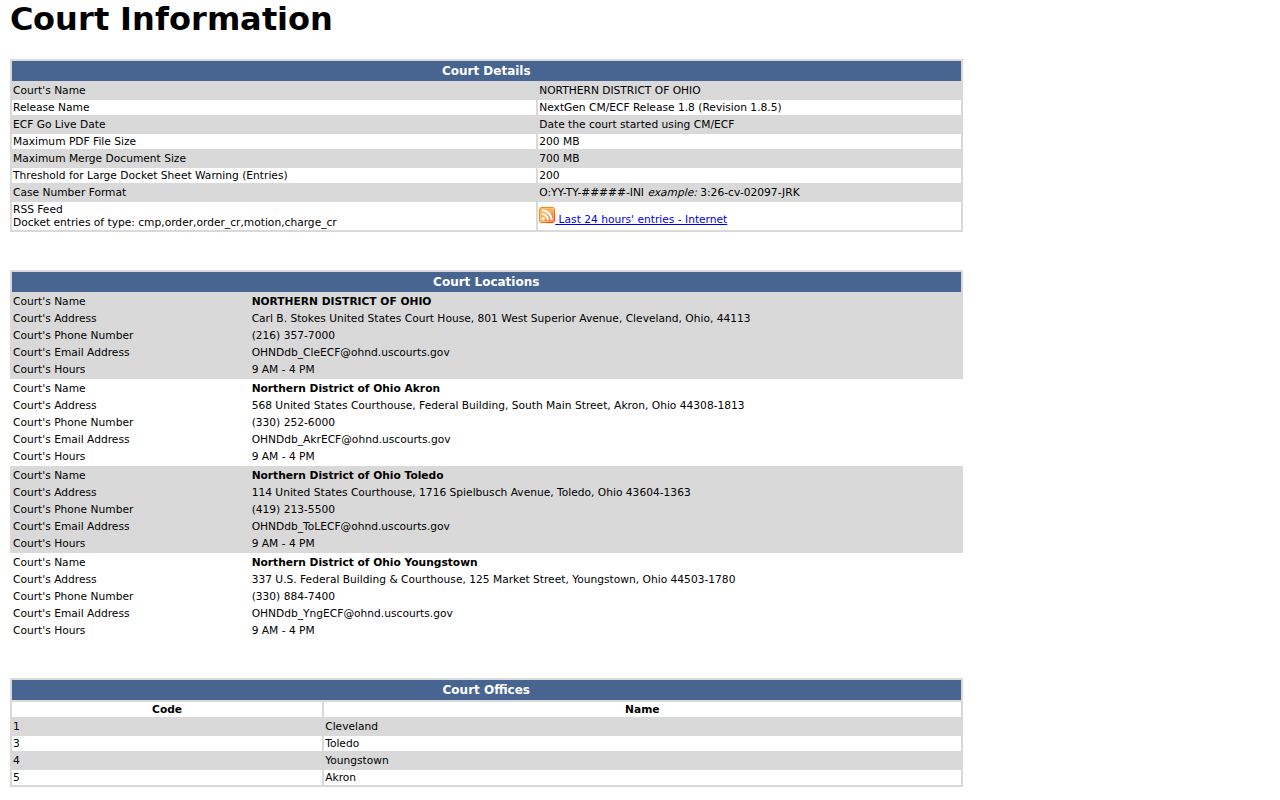
Federal practice repeats the same lesson. Whoever owns the case controls the docket and its official record channel. The Sixth Circuit's official court page shows how the federal appellate side works. Do not confuse it with the Ohio Sixth District Court of Appeals. That one is a state court.
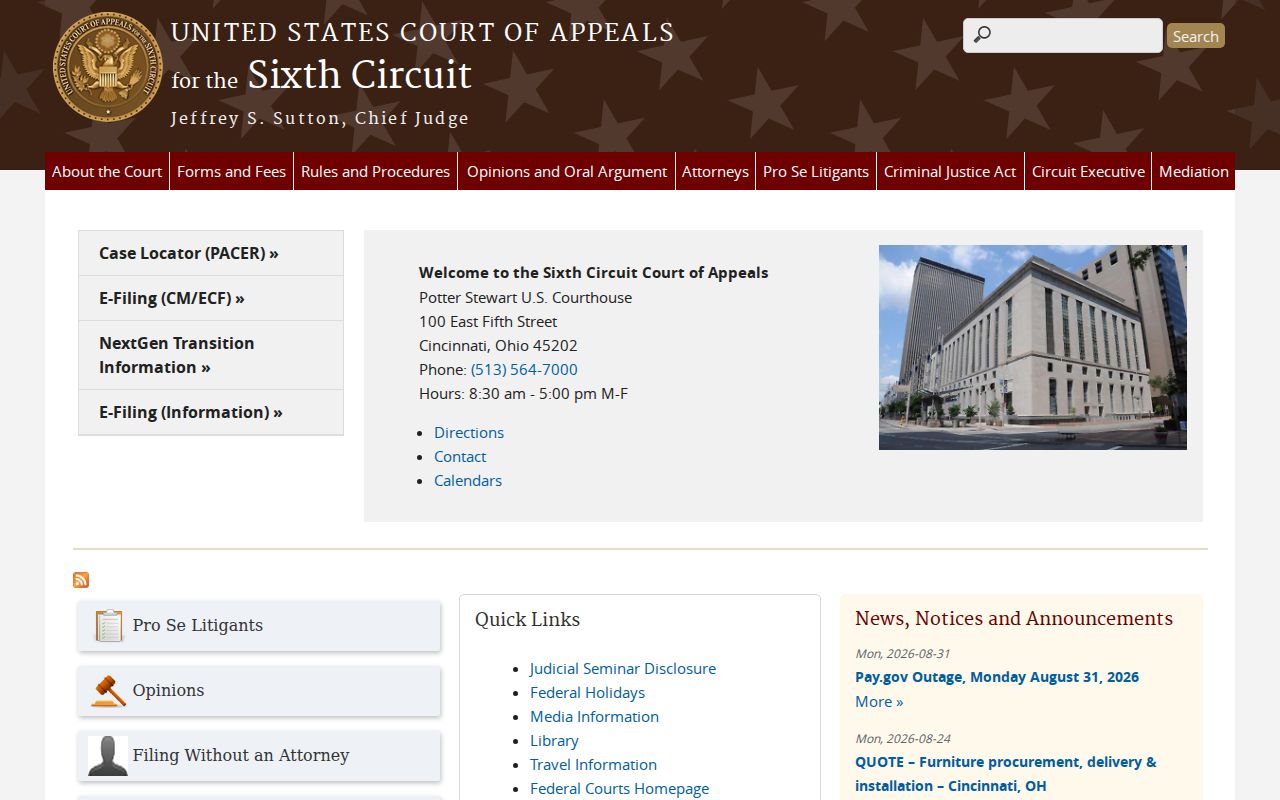
Keep the two appellate systems straight and a Lucas County court docket search lands on the right records platform. Mix them up and the query goes somewhere it cannot succeed.
Map and Directions to the Lucas County Courthouse
Common Pleas General Division felony, civil, tax-foreclosure, judgment-lien, and appellate-related files are kept at the Lucas County Courthouse, 700 Adams Street in Toledo, a building occupying the block bounded by Adams, Erie, Jackson, and Michigan Streets. The Clerk's Civil Division works out of the first floor, alongside the Appellate Division, while the Criminal Division is on the third floor. Domestic Relations (`DR`/`DM`) cases are not filed here at all; that clerk division sits separately at 429 North Michigan Street.
Lucas County Clerk of Courts, Legal Division
700 Adams Street
Toledo, OH 43604
419-213-4484
Monday through Friday, 8:30 a.m. to 4:30 p.m.
No official source located in the research publishes a parking rate, locker policy, or general security-screening rule for this courthouse specifically, so calling case information at 419-213-4485 before a visit is the safer way to confirm the correct file room. Bring the case number or full name; staff can locate courtroom information from either.