
Lucas County Court Record Requests
First match the record to its keeper. The Lucas County Clerk of Courts Legal Division holds Common Pleas filings. Those cover appellate, civil, felony/criminal, and domestic relations. Toledo, Oregon, Sylvania, and Maumee each run their own municipal clerks for local cases. Juvenile and Probate sit in separate Common Pleas divisions. Under the Clerk’s 2025 Public Records Policy, a request may be oral or written. There is no mandatory form, required wording, identity disclosure, or stated purpose. All it has to do is reasonably identify the record.
- Identify the court, division, case number, party, and document type.
- Check the court’s current public portal for the docket or available image.
- Ask the record keeper for inspection, a plain copy, or a certified copy.
- Use the Legal Division counter, telephone, written request, or published division fax as appropriate.
- Pay documented duplication or delivery costs after the keeper explains the request.
General Division files start with the Legal Division. The office sits at 700 Adams Street, Toledo, Ohio 43604, and answers at 419-213-4484. Case Information lists 419-213-4493. The General Division payment service lists 419-213-4485 for civil or criminal case information, and the office offers no dedicated records email or web form, so plan on a call or a visit.
Lucas County Court Record Forms
The local policy is blunt. No form, special words, name, or reason is required to ask for a public record. Staff can help sharpen a vague request. Still, a case number, party name, court division, document name, and date range save time, because they point staff straight to the correct file. Inspection is available during regular business hours. The Clerk says records should be provided promptly once volume, location, and any legal review are considered.
Complex requests may receive an estimated time and cost. Advance payment may be required. When a record is withheld in whole or in part, the office must identify the legal authority for the denial or redaction and release the nonexempt portion. That procedure covers Clerk-held requests. A municipal record should go to its own municipal clerk.
Kinds of Court Records
“Court record” is not one document. The Common Pleas clerk’s record can include the docket, journals, pleadings, orders, judgments, and filed images. A transcript is different. It comes from the court reporter or the reporting process, not from a docket-copy request to the Clerk. A municipal traffic record also differs from a General Division civil case. Both may have a public docket.
- Case summary and Register of Actions
- Pleadings and filed motions
- Orders, judgments, and journal entries
- Available related-document images
- Certified copies issued by the court record keeper
The Common Pleas clerk statute sets the clerk’s general-docket duties and the online-access obligation, within legal limits.
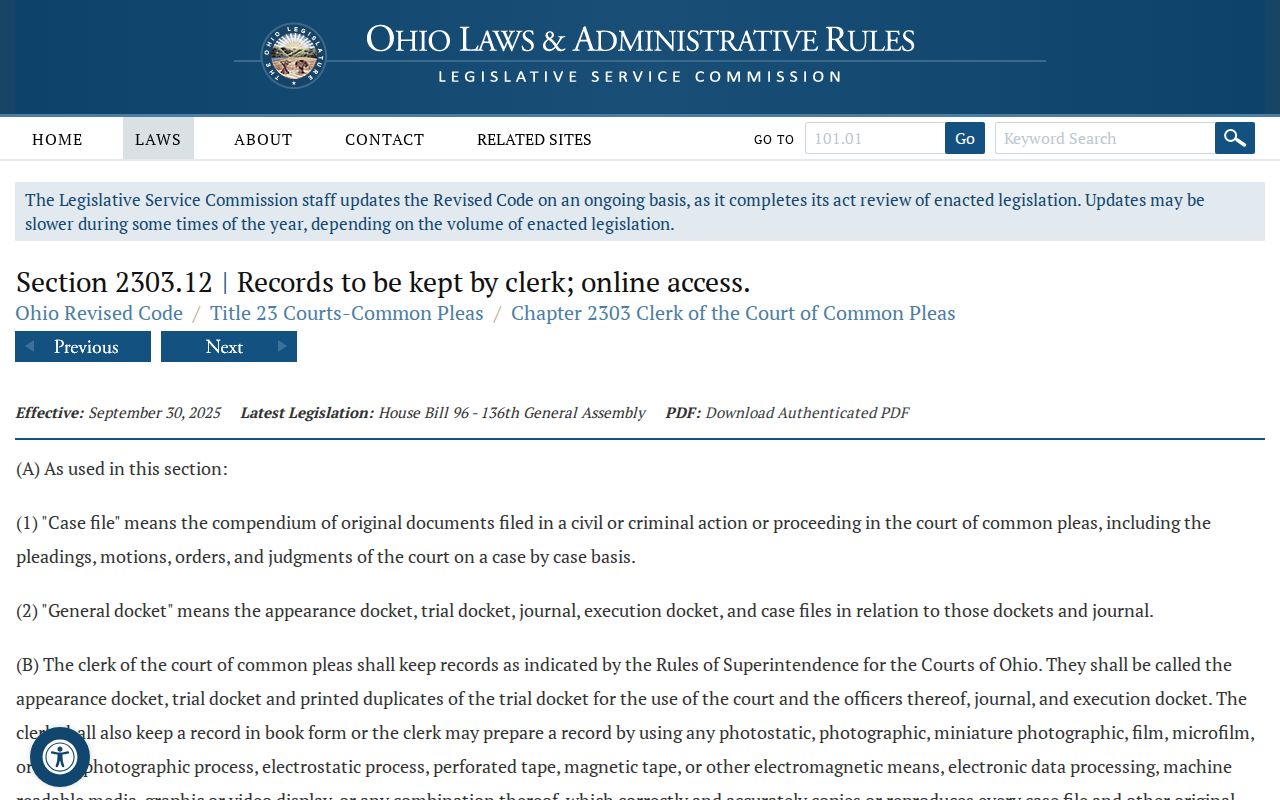
That duty to keep a docket does not make every paper viewable from home. Nor do all divisions share one unified search screen.
Lucas County Court Record Actions
The Register of Actions is a case’s chronological docket. For current General Division records, Navigator can lead from a search result to the case summary. It then opens the Register of Actions. There you may see case status, filed date, party role, hearing events, and icons linked to documents. The Navigator Public Portal locates and displays cases. It is not a substitute for the file room or a certified record.
When a related document is available, the browser preview may show only the first two pages. Use the portal’s Download Document control for the complete document. An image can be missing for several reasons. The file may be older paper. Access may be limited, or the record may sit with a different keeper. It does not prove the court action never occurred.
Court Records: What They Contain
What’s inside depends on the case and your level of access. A civil or criminal docket may show the case number, caption, filing date, party entries, event history, order references, and status. The file can hold more than the docket shows. A certified copy is different. It is an official record issued by the keeper. It is not a screen print, a portal preview, or an ordinary paper copy.
| Case number | The unique court identifier, which can use current or legacy Lucas formatting. |
|---|---|
| Caption and parties | The case style and listed participants, subject to restriction rules. |
| Register of Actions | The chronological docket history. |
| Documents | Pleadings, orders, and judgments when publicly accessible or released by the keeper. |
| Certification | An official copy from the clerk or court that maintains the record. |
Lucas County Court Record Images
When a General Division record shows no image, contact the Legal Division. Do not trust a partial online display. Civil file services sit on the first floor. Criminal file services sit on the third floor at 700 Adams. Domestic Relations and Domestic Violence files are different. They use the Family Court Center at 429 North Michigan Street. That separate location trips up plenty of visitors, so check it before you go.
Lucas County Clerk of Courts
Legal Division
700 Adams Street
Toledo, OH 43604
419-213-4484
Common Pleas appellate, civil, felony/criminal, and domestic-relations record custody.
The Clerk’s division and location page lists the counters and file-room routes you need.
Ohio Revised Code 149.43 is the Ohio Public Records Act authority the Clerk’s local policy cites.
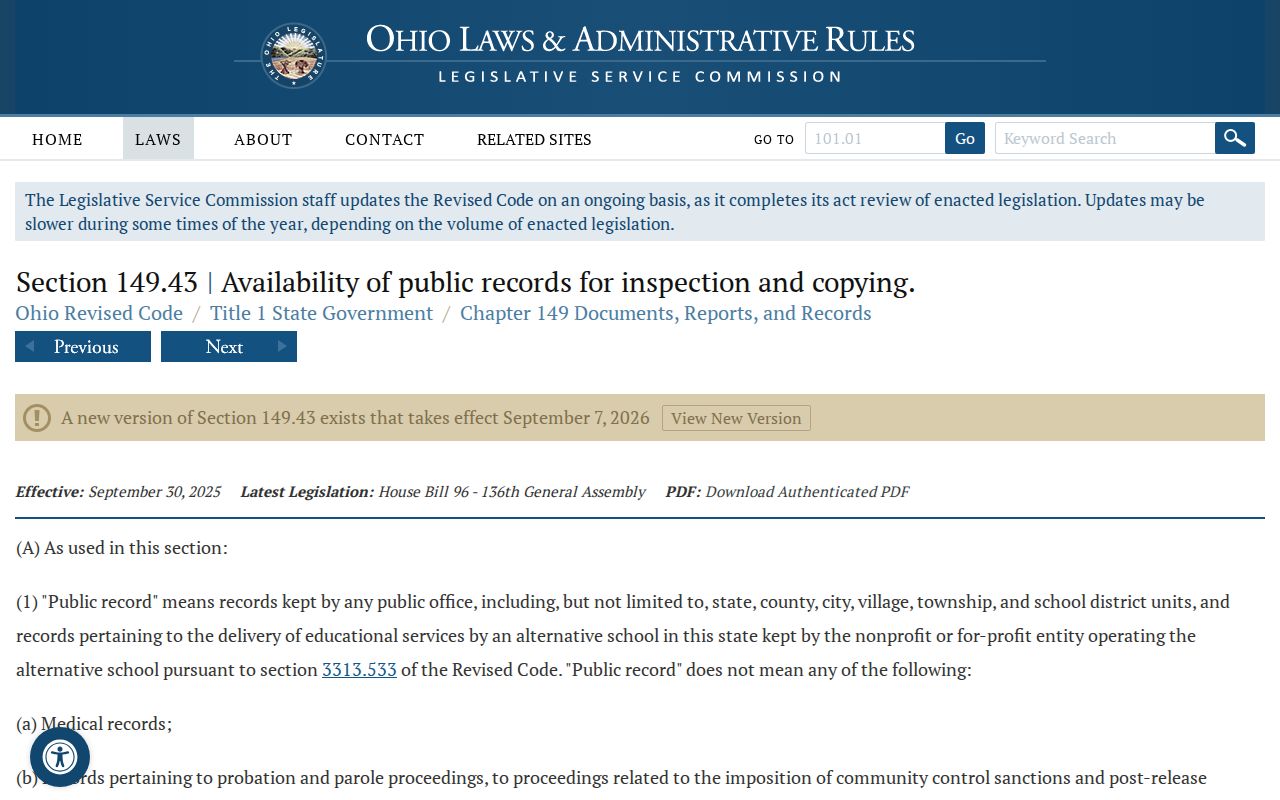
For administrative records the Clerk holds, the public-records policy is the request route. Case material stays governed by the court-specific access rules.
Copy Fees and Certification
Copy costs are spelled out in the Clerk's policy. Paper public-record pages run five cents each, and email delivery costs nothing. Want a CD or other media, postage, or supplies? You pay the actual cost. No labor, review, or redaction fees appear anywhere in the policy. Be careful, though: these amounts are not a Common Pleas certified-copy price. The policy sets no General Division certification fee. So call the Legal Division and confirm the charge and payment method before you make the request.
| Item | Amount or rule | Scope |
|---|---|---|
| Paper public-record copy | $0.05 per page | Lucas Clerk policy |
| Email delivery | No charge | Lucas Clerk policy |
| Media, postage, supplies | Actual cost | Lucas Clerk policy |
| General Division certification | Confirm with keeper | No published amount located |
| Sylvania plain copy / certification | $0.10 per page / $2 | Sylvania Municipal Court only |
Lucas County Court Record Fees
Municipal clerks in the area each run their own systems and fee schedules. Sylvania's Civil Division materials list a ten-cent plain copy and a two-dollar certification. Those numbers belong to Sylvania alone. Do not carry them over to Lucas Common Pleas, Toledo, Oregon, or Maumee. Need a certified Toledo journal? The municipal Clerk's public route is 419-936-3650. Oregon and Maumee handle requests through their own clerk channels.
Sylvania's system also warns that a screen result has limits. Verified information takes a written request or a visit in person. That is the real lesson for any docket search. The online docket helps you find the case, but a certified or verified copy has to come from the local court itself.
Access Rules for Court Records
Ohio's Rules of Superintendence draw a line between walking up to the courthouse terminal and pulling records electronically from home. The presumption runs toward openness. Still, protected information stays out of public view. Ohio's court-record access rules set that framework, and the Ohio Public Records Act, ORC 149.43, is the authority the Clerk's local policy cites as well.
Access point: a public portal is one route, not the whole record system. For a Common Pleas record that is not found online, use the Legal Division counter, telephone case-information channel, a written request, or the division’s published fax route.
Lucas County Court Record Redactions
ORC 2303.901 keeps personal identifiers and named protected materials out of public case documents. Restricted Navigator parties may not show up in results. Juvenile and some domestic-relations files face extra limits. Those limits cover protected health, treatment, guardian ad litem, and financial disclosures. When the Clerk redacts or denies, the policy demands an explanation and legal authority. The rest of the file gets released.
The Ohio Revised Code's public-document rule spells out the limits that govern Common Pleas case documents. It covers both personal identifiers and protected materials.
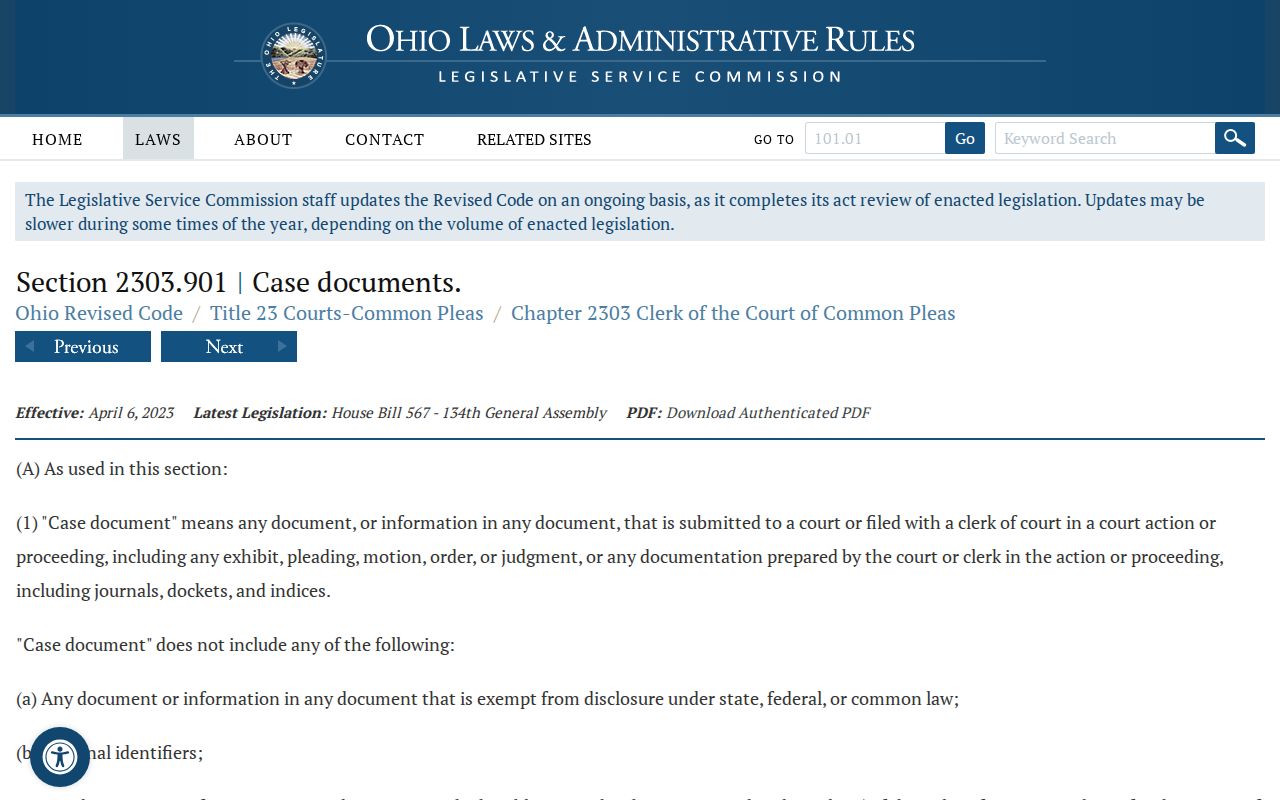
So a Lucas County docket can stay public. One filing or identifying detail may not be available remotely. The law, not the clerk, is doing the blocking.
Sealed or expunged matters can lose index information or have it deleted under ORC 2953.32. An empty search result does not mean no record exists. Never try to work around a restriction. The court or clerk with custody can explain the lawful public route. A signed, journalized order or an appropriately certified copy remains the best proof of any court action.
The Ohio sealing and expungement statute describes the effect of qualifying orders and their exceptions.
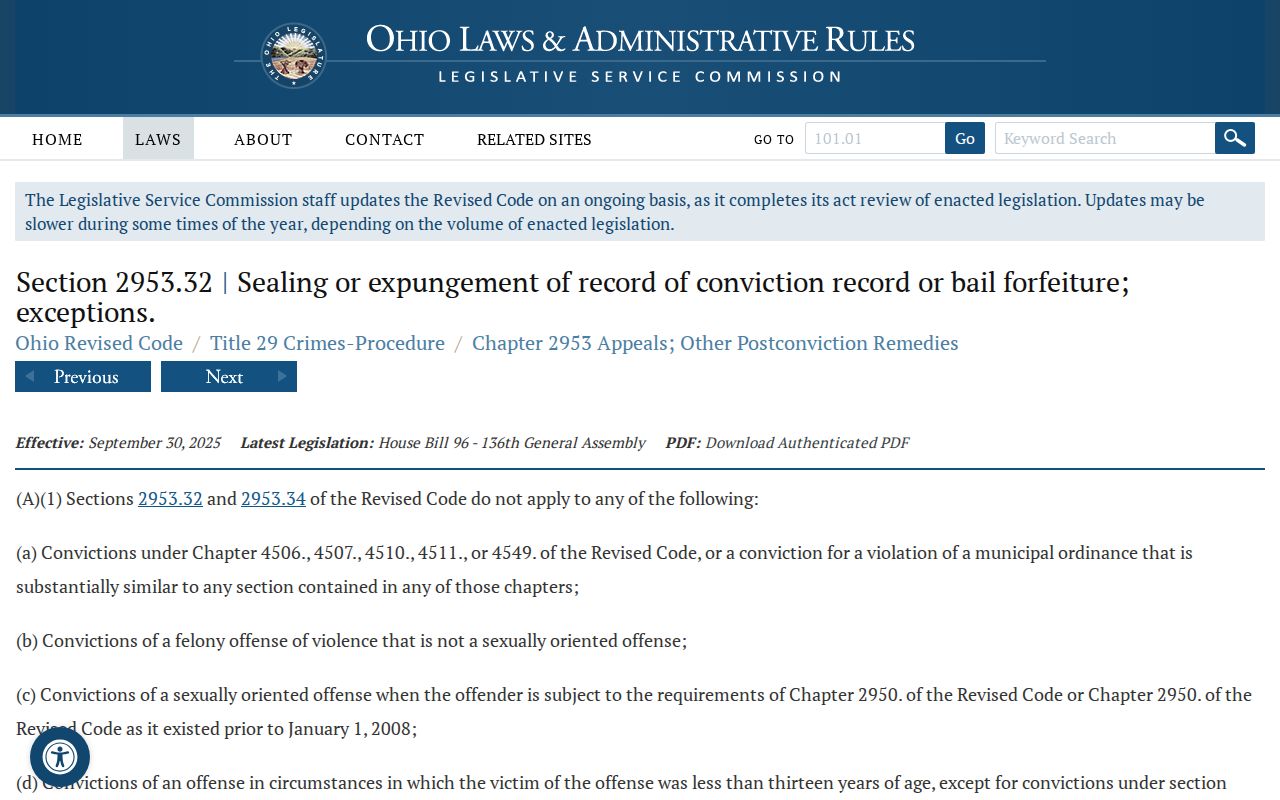
Paying that statute's application fee and meeting its eligibility terms are separate from asking for a routine copy of a public docket. Don't mix the two up.
A portal result can come back thin for several reasons. The party may be restricted. The record may sit in a different division, or the file may predate digitization. Or the law may require redaction. Juvenile traffic belongs to a separate Juvenile Court docket, not an adult municipal file. Aim any record request at the court that keeps the document. Ask for only what the law makes available. If you need the court action for something formal, ask whether a signed journal entry or certified copy is required.
One more timing wrinkle. A Lucas County online docket entry can appear before signature and journalization. Use the searchable docket to find the right file. Then confirm the controlling document with the originating court or clerk.